
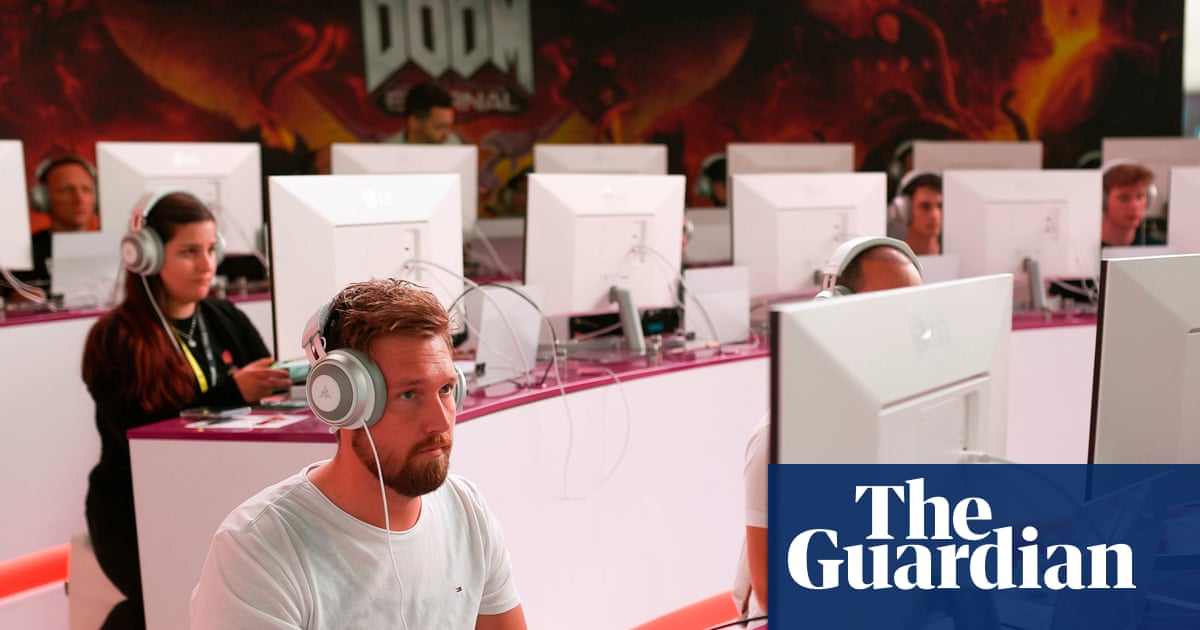
IIn August 2009, at the very first Gamescom, I sat in a small conference room in Germany playing Mario Kart and World of Warcraft on a laptop using a technology that was brand new at the time: cloud gaming. It was a demo of the yet-to-launch service Gaikai, which promised to let you play any game in a browser window without a console. (Here’s an ancient video of that demo featuring a very young Keza.) With one click, I could launch any game hosted on servers hundreds of miles away. It really felt like the future.
Since then, numerous companies have tried to be the first to truly embrace game streaming, vying to become the Netflix of games. Sony eventually bought Gaikai for $380 million (£242 million) in 2012; its technology now enables classic game streaming on PlayStation and enhanced game streaming on PS5. OnLive, Gaikai’s first competitor, launched in 2011 but folded after less than a year, leaving Sony to acquire all of its patents. Google’s cloud gaming service Stadia also failed, launching in 2019 and shutting down three years later.
Even though people just don’t seem to want to use game streaming services – or at least not enough to pay a separate monthly subscription for them – Sony and Microsoft remain firmly committed to the idea, bundling game streaming into their PlayStation Plus and Xbox Game Pass services. I use both options fairly regularly when I want to quickly check out a game, mostly because modern download sizes are ridiculous (let’s say Final Fantasy VII Rebirth takes up almost 150GB of space on my PS5, almost a quarter of the available space). Who wants to spend 30 minutes managing their hard drive every time they want to play something new?
However, last week Microsoft announced that it was introducing time limits for game streaming: you’re now allowed 5-15 hours per month, depending on your subscription level. And yes, you are right: this is not enough time to complete at least one medium-sized game. This calls into question Microsoft’s previously unwavering commitment to cloud gaming – and when even Microsoft with its endless resources can’t seem to make it work, is the writing on the wall for game streaming in general?
In the beginning, the biggest problem with streaming was input lag: the time it took for a game to respond to a button press. Usually, when you play a game, this delay is unnoticeable. When streaming, it was often terribly obvious that it took your character a full second to jump after you pressed the A button. Not all games rely heavily on timing and dexterity, but many do, and playing games with little lag was nauseating.
This is a much less serious problem now, but another problem has only gotten worse: game streaming requires instant transfer many data, making it costly for your Internet connection and costly for your service provider. Here’s a comparison: An hour of watching Netflix uses about 1GB of data. An hour of game streaming via Xbox requires about 4GB. Microsoft’s servers must stream video of your live gameplay to you, and constantly receive and interpret your controller input. It’s no wonder Microsoft suddenly wants to limit your hours.
The cloud gaming model has always been based on the idea that data infrastructure will become faster and cheaper in the future. Its benefit is that it outsources the processing power so you can play whatever you want without upgrading your console or PC, or even owning one at all. Unfortunately, thanks to artificial intelligence companies and their chatbots’ bottomless demands for computing power and energy, the opposite has happened. Data and computing power are now more Expensive. Ironically, this change was initiated by Microsoft itself, like everything else: in the last fiscal year, a huge portion of the company’s spending went to data centers and artificial intelligence infrastructure. This suggests that Microsoft is choosing to prioritize providing data to Azure and Copilot users over its gaming customers.
Will this affect you? Probably not. Just 4% of all Game Pass subscribers use it more than 15 hours a month, Microsoft said in a blog post announcing the changes. This brings us back to the question: if cloud gaming really is the future, why isn’t anyone using it? It’s been a long time since that 2009 demonstration, and the technology still hasn’t gained significant traction. Is it time to give it up?
Besides Sony and Microsoft, there’s one more player left in this death match: US tech firm Nvidia, whose game streaming service GeForce Now (launched in 2013 and updated many times since) is arguably the most successful in the world. Nvidia is at the peak of the artificial intelligence boom, becoming the most valuable company in the world. Its computing hardware powers all the data centers the rest of the tech industry is building to meet the imagined future demand for artificial intelligence. Perhaps when this all shakes out, it will be the only company that can afford to provide game streaming services at all.
What to play
I’d been feeling under the weather most of the summer and needed something fun to do, so I dove into Kingdom Come: Deliverance II – think Skyrim, but 15th century historical fiction.
I was immediately impressed by the outstanding writing, story and acting, which was much more humorous and interesting than I expected from a hardcore medieval RPG. And I also love how unabashedly time-consuming this game is: you have to control every blow in a drawn-out sword fight; herbs have to be manually crushed and mixed to obtain health-restoring decoctions; and if you want anyone to talk to you, you’ll have to wash your face (and your dirty tunic) regularly to avoid stinking. Last night I spent 20 minutes forging horseshoes at the forge. During working hours, you carry sacks of flour, and the owner of the tavern swears at you.
I can’t help but respect this naturalistic commitment to dirt and hustle and bustle; You know, the life of a knight is not all jokes. I’ve spent many, many hours playing this game and I’m still a stinking man. I may never finish it, but I’m determined least I’ll get to the point where I’ll have my own horse and a decent pair of boots.
Available: Xbox, PlayStation 5, PC
Approximate playing time: 55+ hours
after promoting the newsletter
What to read
-
Nintendo’s broadcast on Tuesday revealed a ton of new details about the upcoming game. Zelda: Ocarina of Time a remake that I’m glad to say looks beautiful. The remastered Link looks like a doll, and the castle town of Hyrule looks a bit like a living Playmobil village, with a watercolor filter applied to it that makes the whole game look like something half-forgotten. (I’m a little less excited about the addition of voice acting to cutscenes; Navi was already annoying enough.) Check out the demo here.
-
For The Ringer, Lewis Gordon, a frequent Guardian games contributor, has written an excellent long read about the Japanese publisher. CapcomCurrent hot streak, talking to a host of executives and developers about exactly how the company has managed to buck the trend while the rest of the games industry is on fire.
-
Patrick Miller – better known as pattheflip – published a thought-provoking reflection on how and why some gamers become over-invested in – and even addicted to – video games. “I say this as someone who has loved video games my entire life; If games perform a supporting function in someone’s life, then it is life that needs to be corrected, not games.”
-
At the end of last week, White House has released this terrible little propaganda arcade game that features disgusting riffs on popular games like a version of Tetris where you have to build a wall on the Mexican border to prevent the “coming horde.” This particular game was later removed after the Tetris Company expressed its disagreement.
What to press
Block of questions
Reader Pierrot sent this question (along with some very nice feedback in the newsletter – thanks Pierrot!):
“I like to get into story-based RPGs from time to time, such as Kingdom come, deliverance, Skyrim And Baldur’s Gate series, but as I get older I find the constant action sections overwhelming and boring. Can you recommend me some good RPGs that don’t have combat as a core game mechanic?
You’re not alone, Pierrot: for a surprising number of players, combat is simply something you have to do to get to the parts of the game that you find more interesting. Most RPGs these days have a “story mode” option, which at least makes all the combat easier if you’re not interested in that. Of course there is Disco Elysiumchallenging role-playing game with no combat at all; like Citizen Sleeping, it is mostly text based. I’ve heard good things about Eastshadean open world game where you are an artist, not a fighter. I would also suggest Pentimentalthough it is very different from Skyrim in style. AND There: The Cloudcatcher Chronicles Worth watching if you don’t mind cuteness.
If you have a question for the question block or anything else you can say about the newsletter, please hit reply or email us at pushingbuttons@theguardian.com.