
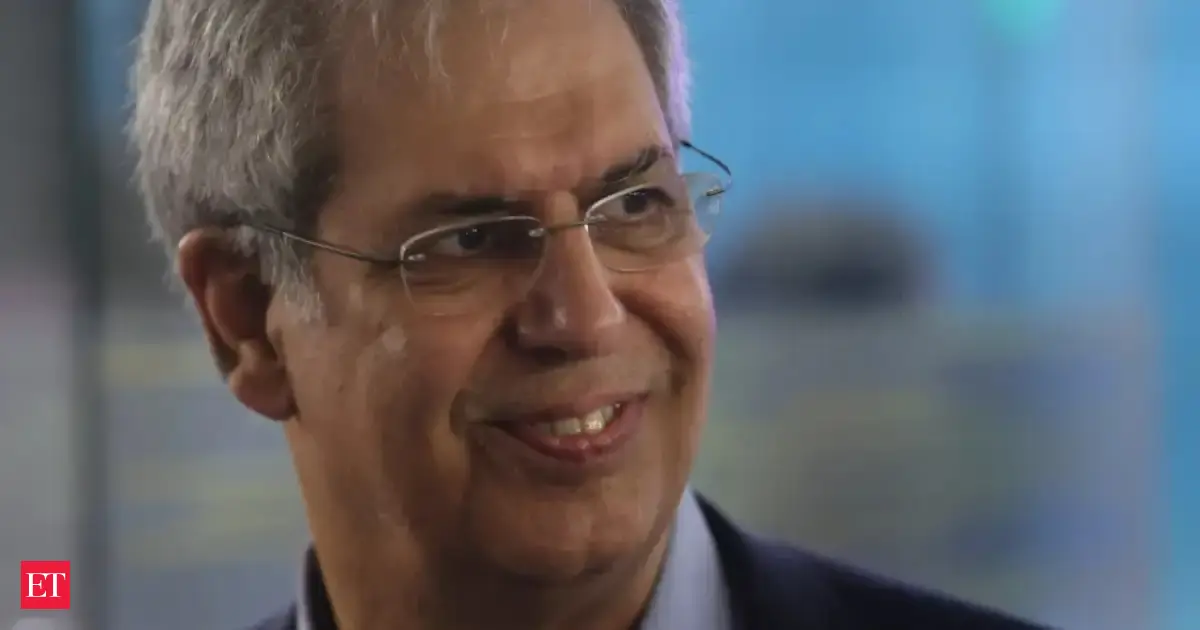
Today, the humble executive has become a key figure in a battle that could define both the leadership and ownership structure of the 158-year-old Tata empire.
Noel Tata, chairman of Tata Trusts, the philanthropic arm that owns about 66% of the holding company Tata Sons, now occupies one of the most powerful positions in Indian corporate governance.
Since Noel Tata succeeded Ratan Tata as chairman of the philanthropic trusts following his death in October 2024, he has acquired a decisive voice over the future of the automobile and aviation conglomerate.
That influence is now being tested in separate controversies over the reappointment of Tata Sons chairman N. Chandrasekaran and the prospect of a public listing of Tata Sons.

Also read | Tata’s quiet man remains amid ‘total war’ at Indian conglomerate
Noel Tata has made it clear that he opposes the listing of Tata Sons, arguing that it should remain privately owned and all options should be explored to avoid an initial public offering.
“The listing would destroy its character and strike at the very core of this principle,” Tata said in a statement.
Post-listing, Tata Sons will face pressure from shareholders seeking financial gain, leaving no room for funds to be used to rescue the group’s troubled firms or prop up businesses with payouts far into the future, he added.
His position pits the charity that controls the Tata empire against the Tata Sons board of directors and places him at the center of a widening debate over how India’s largest conglomerate should be run.
LISTING DEBATE
The listing debate intensified after India’s central bank rejected Tata Sons’ request to deregister as a top-tier non-banking financial company, potentially opening it up to rules that could require it to list publicly.
On Friday, Shapoorji Pallonji Group, Tata Sons’ second-largest shareholder with an 18.4% stake, backed the listing, saying it looked forward to working with the company in the process.
Also read | All-out war at Bombay House: Trusts call Chandra’s return ‘illegal’, Noel fights to keep Tata Sons off list
The group, which has long sought to monetize its stake, is considering a proposal under which it could sell part of its stake for at least $2.6 billion.
But Noel Tata takes the opposite view, insisting that Tata Sons should remain private.
The dispute goes beyond ownership. Tata Trusts also challenged Tata Sons’ September 17 decision to ask Chandrasekaran to stay on for a third term, weeks after he said he would not seek reappointment when his term ends in February 2027.
The Trusts called the resolution a “legal nullity”, arguing that Tata Sons’ articles of association require both nominee directors of the Trust to vote on the appointment or reappointment of a chairman.
According to Tata Trusts, four directors voted for Chandrasekaran while Noel Tata voted against.
The vote has propelled Noel Tata into a succession battle that could define the group’s next decade, cementing his position as the kingmaker of the Tata empire.
RETAIL AND TRADE TRADE
Long in the shadow of Ratan Tata, Noel built his career in the group’s less glamorous corners, building a reputation in retail and trading rather than Tata’s flagship steel, software and auto divisions.
Unlike Ratan Tata, one of India’s most recognizable corporate leaders, Noel Tata has quietly cultivated his influence.
He rarely sought publicity, even as he amassed positions on group boards and became a trusted adviser to the Tata establishment.
Although he was rarely seen in public, he served on the company’s board of directors for several years before becoming a central figure after Ratan Tata’s death.
The trustees unanimously appointed him as chairman of Tata Trusts and he later joined the board of Tata Sons as a non-executive director.
“The challenge is to find the most efficient allocation of the resources we have, to make choices about how to use those resources meaningfully, and to do what is best for India,” Noel Tata said at an event in August.
After graduating from the UK’s University of Sussex, Noel Tata joined Tata International, the group’s trading arm, and then moved to Trent, which was then a relatively small retailer.
As managing director since 1999, he has helped build Trent into one of India’s largest retailers, with brands such as Westside and fashion chain Zudio.
In 2010, he became managing director of Tata International, growing revenue from approximately $500 million to more than $3 billion. He stepped down in 2021 after reaching the retirement age for group executives, but remained as non-executive chairman.
Along the way, he held senior conglomerate board positions, including chairmanship of Voltas and Tata Investment Corporation, as well as vice chairman of Tata Steel and watch and jewelry maker Titan.
“He has kept a low profile, so the outside world doesn’t know him well, but he is a typical Tata,” former Tata Sons chief executive Sanjay Singh told Reuters in 2024.
