
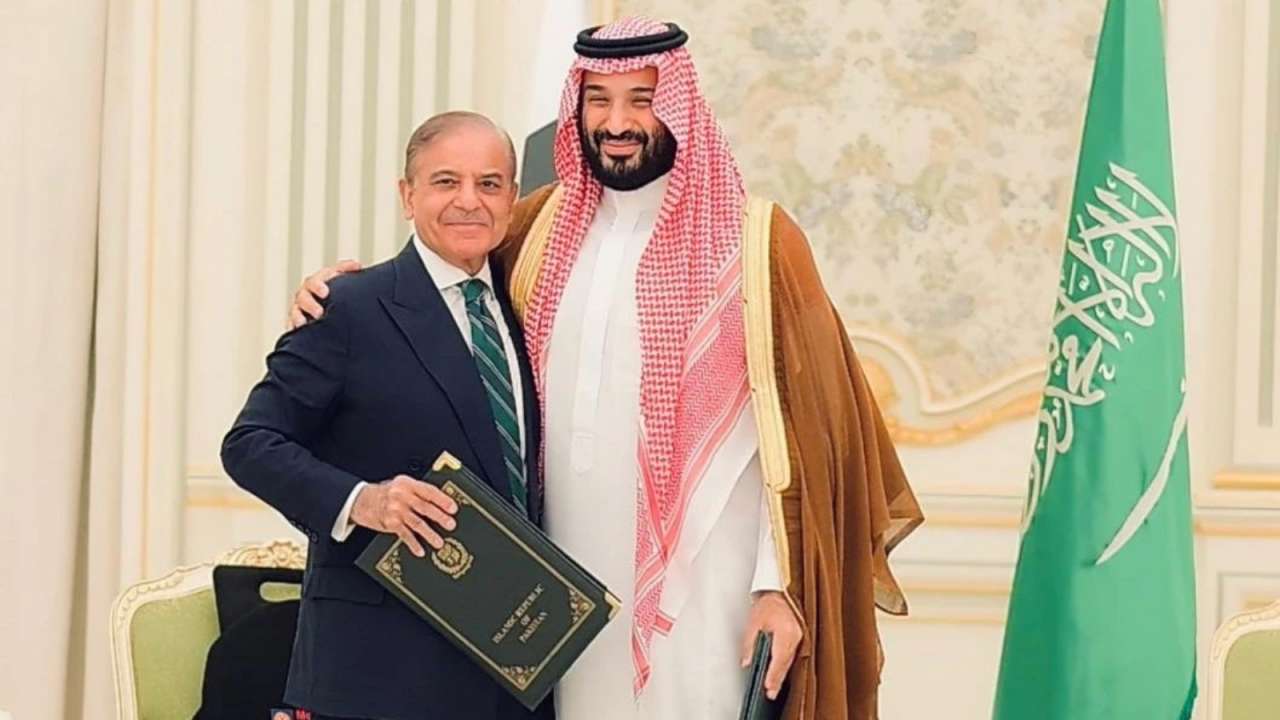
Pakistan Army spokesman Ahmed Sharif Chaudhry said the defense pact with Saudi Arabia and Turkey does not have an aggressive element and is purely defensive in nature, based on collective deterrence.
As the Iran-backed Houthis open a new front in the war in West Asia, Pakistan has now turned to its defense agreement with Saudi Arabia and its position on the conflict.
Speaking to Al Arabiya English, Pakistan Army spokesman Lieutenant General Ahmed Sharif Chaudhry said the defense pact between Saudi Arabia, Pakistan and Turkey “has no aggressive element” and is based on “collective deterrence,” calling it “purely defensive.”
The statements came after the Saudi-led coalition in Yemen on Wednesday blamed Houthi rebels for an attack on Islam’s holy city of Mecca, sparking outrage across the Muslim world.
Lack of offensive element based on long-term ties: Pakistan Army
A Pakistani army spokesman, asked whether the defense pact with Saudi Arabia and Turkey complicates Islamabad’s position vis-à-vis Iran, said the military alliance was not created “out of the blue.”
“This military alliance that we entered into did not arise out of the blue. It is based on a long-standing strategic relationship between the countries,” Chaudhry said.
He added that Pakistan’s relations with Saudi Arabia and Turkey are based on “emotional connection”, “cultural connection”, people-to-people ties as well as “military ties that have existed for decades”.
Houthis open new front, Saudi Arabia draws red line
Recent Houthi attacks on Saudi Arabia have opened a new front in the conflict in West Asia. Last week, Houthi missile and drone strikes in Saudi Arabia injured at least 73 civilians.
On Wednesday, the Saudi-led coalition fighting Yemen’s Houthis said it had shot down a drone south of Mecca a day earlier before it could enter restricted airspace over Islam’s holiest city. The coalition said: “The safety of the Two Holy Mosques and pilgrims is a red line.”