
Business
oh-Ashish Rana

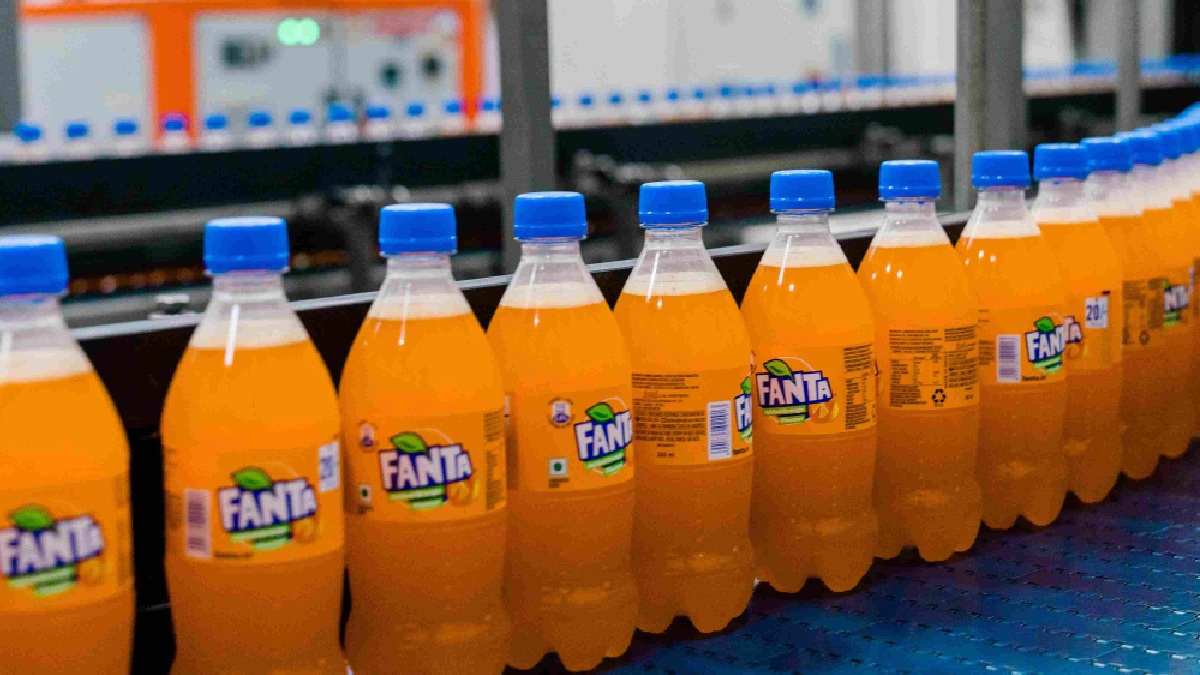
A can of Fanta bought in London and a similar can of cold drinks bought in India have sparked a debate about how a packaged food and drink brand should disclose its nutritional value.

India’s Supreme Court is weighing stricter front-of-pack nutrition labeling rules, spurred by health activists challenging the FSSAI’s preference for simpler labels over color-coded warnings, despite opposition from the food industry.
According to the report, the London version may contain 63 calories, while in India it contains significantly more sugar and uses artificial coloring, the presence of which triggers a stricter warning in Europe. Although in India the information is indicated on the back of the package.
Front-of-pack labeling debate in India
The issue has now turned into a legal battle over Indian food labeling regulations. The Food Safety and Standards Authority of India (FSSAI) has now reviewed prominent color-coded warnings indicating high levels of sugar, salt and fat.
However, recently the regulator has abandoned this approach and instead supported black and white nutrition labelling. Health activists challenged the decision in the Supreme Court. The top court has now asked the FSSAI to review stricter warnings, including the systems used in Israel.
Why food companies opposed warning labels
The proposed warnings have met with strong opposition from major food and drink companies. According to a Reuters review of the March 19 meeting, industry representatives said color-coded warnings could confuse consumers and would not necessarily get them to change their eating habits.
Coca-Cola India chief executive Mili Bhattacharya said it is “very simplistic” to assume that consumers will make significant changes to their diet simply by seeing a symbol or icon on packaging.
Even consumer advocates argue that simple front-of-pack information can help consumers make quicker decisions, especially when comparing highly processed foods.
Different recipes, different warnings
- Fanta: The Indian version has about three times more sugar than the London version. Artificial coloring is listed in small print.
- KitKat: The standard Indian KitKat contains 4.5% cocoa solids, compared to no less than 22% cocoa in the Australian version.
- Maggi: Indian versions of Maggi use palm oil, while many British versions use sunflower oil.
- Maggi Labels: Some Maggi packets sold in the UK are made in India but have a red warning label on the front of the packaging indicating high salt levels.
- Coca-Cola: The company and its bottling partners use traffic light nutrition labels in about two dozen European markets.
- Cerelac: In 2024, Nestlé announced that it will begin selling sugar-free Cerelac in India.
What happens next?
Now the Supreme Court review means the debate over India’s front-of-pack food labeling system is not over yet. For now, FSSAI will continue to adapt the current labeling regulation, however, if the litigation continues and India ends up adopting a stricter warning, then it may change to the labeling.