
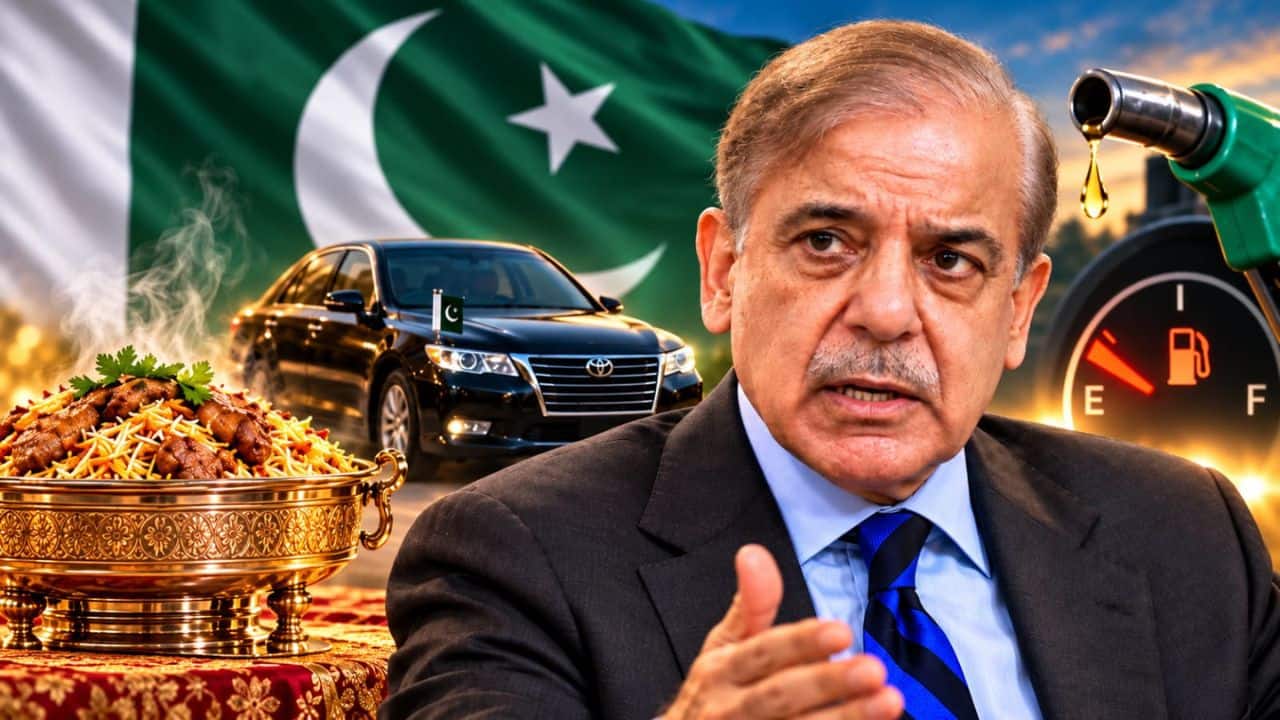
Pakistan’s fuel crisis has reached the wedding table with the government imposing a one-course limit on wedding functions as part of a new campaign to save fuel and cut costs. The government has banned the purchase of new cars, halved the fuel allocation for official vehicles and set earlier closing times for markets, wedding halls and restaurants across the country.
The measures came into effect immediately after the cabinet issued a new notification on Thursday. Pakistan has reinstated restrictions as renewed fighting in the Middle East puts pressure on fuel supplies and prices.
Pakistan’s one-dish wedding rule: what will change?
Large portions of food are a common sight at South Asian weddings. Pakistan’s latest austerity order puts marriage functions squarely under fuel and spending restrictions.
- At wedding celebrations and events, only one dish may be served.
- Wedding halls and other commercial venues used for celebrations must close by 10 p.m.
- The measures are aimed at reducing fuel consumption and non-essential costs.
The one-meal limit is nothing new. Similar measures were taken during Pakistan’s previous fuel saving campaign this year. In March, Sindh also decided to limit wedding menus as part of austerity measures.
Pakistan bans government purchases of new cars
The austerity order also prohibits government departments from buying new cars. This is a ban on government purchases of cars, not a nationwide ban on private purchases of cars.
- Government procurement of vehicles of all types is prohibited.
- Apart from IT-related procurement, procurement of consumer durables has also been stopped.
- Development projects are exempt from these restrictions.
- Fuel costs for company cars were cut by 50 percent in three months.
Operational vehicles used by the military, civilian military, law enforcement, essential services and the Federal Department of Revenue are exempt from fuel reductions. Administrative and non-operational vehicles continue to be covered.
Markets, wedding halls and restaurants are moving to new closing times
The restrictions will also change the length of time many businesses can remain open. The government has set different closing times depending on the type of establishment.
- 21:00: Shops, markets, shopping centers, bazaars, departmental and department stores.
- 22:00: Wedding halls, marquees and other commercial venues for celebrations.
- 23:00: Restaurants, cafes, snack bars and food outlets.
Takeout and home delivery services are exempt from restaurant closure restrictions. Essential services, including pharmacies, hospitals, medical laboratories, gas and gas stations, and electric vehicle charging stations, are also exempt from the closure rules. Gyms, sports facilities, IT companies and call centers are among the other exceptions reported by Pakistani media.
Foreign travel restricted for Pakistani government officials
The government also restricted federal officials from traveling abroad for three months. Where representation abroad is considered necessary, the country may be represented by the Ambassador or High Commissioner of Pakistan.
There are exceptions for some scholarships, training programs and courses organized under formal agreements. When overseas travel cannot be avoided, ministers, advisers and other government officials have been advised to use economy class.
There will be no formal dinners as government spending faces 5% cut
Pakistan has ordered a 5 percent monthly cut in government non-personnel expenditure for the current fiscal year. Development projects are excluded.
Government-funded seminars, trainings and conferences were also limited. Departments have been asked to use teleconferencing where possible and government agencies when an in-person event is necessary.
Formal dinners are prohibited unless attended by foreign delegations. These measures also apply to Pakistani missions abroad, although rent, education and medical expenses remain covered.
Why is Pakistan bringing back austerity measures?
The pressing problem is fuel. Fighting in the Middle East has disrupted energy supplies and increased oil prices. Pakistan’s ministers said this week that disruption to Gulf energy routes and RLNG supply chains is putting new pressure on the country’s energy system.
Pakistan is highly vulnerable when international supplies of oil and gas become more expensive or more difficult to secure. Disruption to shipping and energy routes in the Persian Gulf and Middle East could increase the cost of shipping fuel to the country.
This pressure is already reaching consumers. According to Dawn, Pakistan this week raised petrol prices by Rs 4.42 per liter and high-speed diesel by Rs 6.10 per liter.
Earlier this year, Pakistan used similar fuel economy restrictions.
This is not the first austerity measure in Islamabad in 2026. The government introduced fuel-saving measures in March after conflict in the Middle East disrupted energy markets. These steps included a 50 percent reduction in fuel quotas for company vehicles and partial working from home in the public sector.
Many of these additional restrictions were lifted in June, although rules regarding market closing times remained the same. The government has now brought back a broader set of controls as pressure on fuel supplies returns.
The result was a policy of austerity that spread from government offices to shopping streets and wedding halls. For ordinary families, the most noticeable change may be the simplest: the government now says there should only be one course at a wedding feast.
Stay updated with all the latest news, breaking news in real time and follow all important headlines from India and World News on Zee News.
