
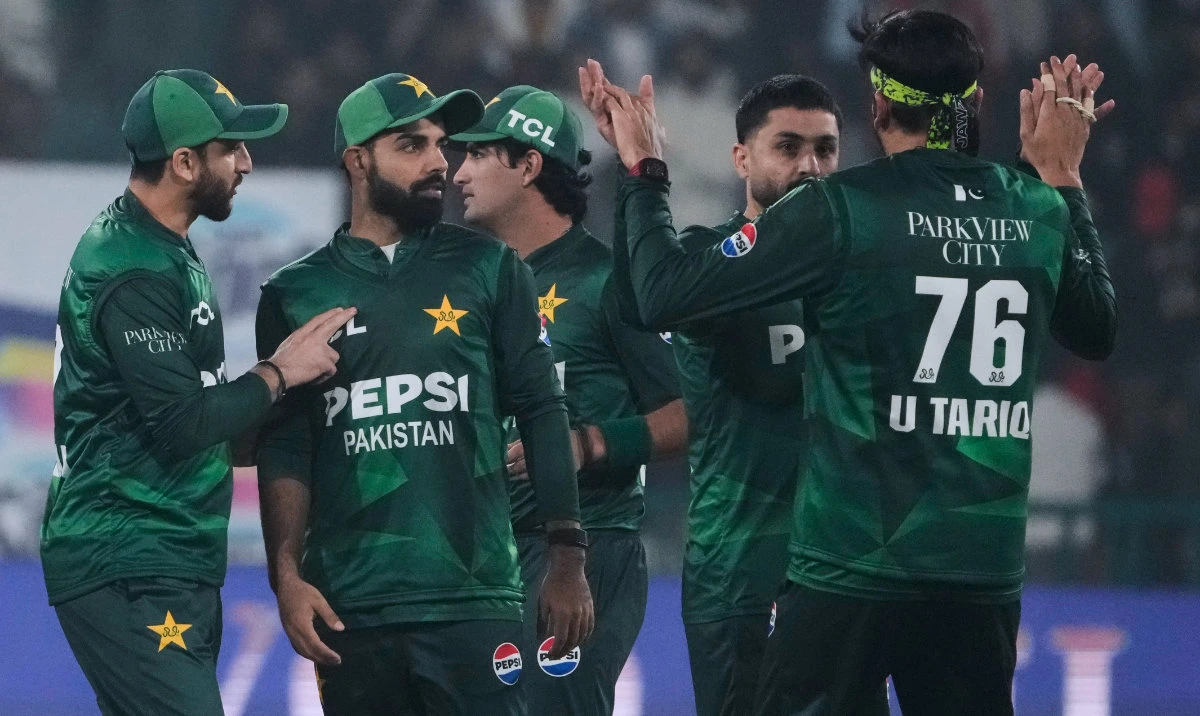
ISLAMABAD: The Pakistan government says the national cricket team will be allowed to take part in the upcoming Twenty20 World Cup but must boycott the group game against arch-rivals India.
India and Sri Lanka are co-organizing the 20-team tournament, which starts on Saturday.
Pakistan will play all its games in Sri Lanka, including all playoff matches, due to political tensions with India. The two teams are due to meet in a Group A match in Colombo on February 15, which is often a highlight of the tournament for fans, broadcasters and organizers alike.
This time it looks doubtful.
“The Government of the Islamic Republic of Pakistan gives permission to the Pakistan Cricket Team to participate in the ICC World T20 2026,” the government said on Sunday on its official X account. “However, the Pakistan Cricket Team will not take the field in the match scheduled for February 15, 2026 against India.”
No reason was given for Pakistan’s boycott of the game against India, but Pakistan Cricket Board (PCB) chairman Mohsin Naqvi criticized governing body ICC for “double standards” by refusing to move Bangladesh’s games to Sri Lanka. Bangladesh replaced Scotland in the tournament.
Naqvi openly expressed Pakistan’s support for Bangladesh and left the decision of Pakistan’s participation in the T20 World Cup to the government when he briefed Pakistan Prime Minister Shehbaz Sharif on the issue.
ICC criticized the decision
The International Cricket Council said in a statement that it was awaiting official communication from the PCB regarding the planned boycott, while warning against damaging the “spirit and sanctity” of global events.
“This position of selective participation is difficult to reconcile with the fundamental premise of a global sporting event where all qualified teams must compete on a level playing field in accordance with the competition schedule,” the ICC said.
“While the ICC respects the role of governments in matters of national policy, this decision is not in the best interests of the global game or the well-being of fans around the world, including millions in Pakistan.”
The ICC said its priority is the successful organization of the T20 World Cup and “expects the PCB to explore a mutually acceptable resolution that will protect the interests of all stakeholders.”
The ICC also said it “hopes that the PCB will consider the significant and long-term implications for cricket in its own country, as it is likely to impact the global cricket ecosystem of which it itself is a member and beneficiary.”
Pakistan’s first match will be against the Netherlands on Saturday in the opening match of the tournament in Colombo. She will then face the United States on February 10 and Namibia on February 18.
India will get two points if Pakistan loses the game.
The Pakistan-India tournament match generates huge interest and is a significant source of income for the ICC through broadcasters and sponsors.
Pakistan and India have not played a bilateral cricket series in the last 14 years, but both countries have regularly competed in the same group in ICC tournaments.
Pakistan captain Salman Ali Agha, who led the team to a 3-0 win in the three-match T20 series against Australia on Sunday in Lahore, said he will follow his government’s instructions.
“It (boycott of the game against India) is not our decision, we can’t do anything about it,” Agha said. “We will do whatever our government and the PCB chairman say.”
Tensions between the two countries spilled over onto the cricket field last year when India’s players refused to shake hands with Pakistan’s during three Asian Cup games, including the final, in the United Arab Emirates.